
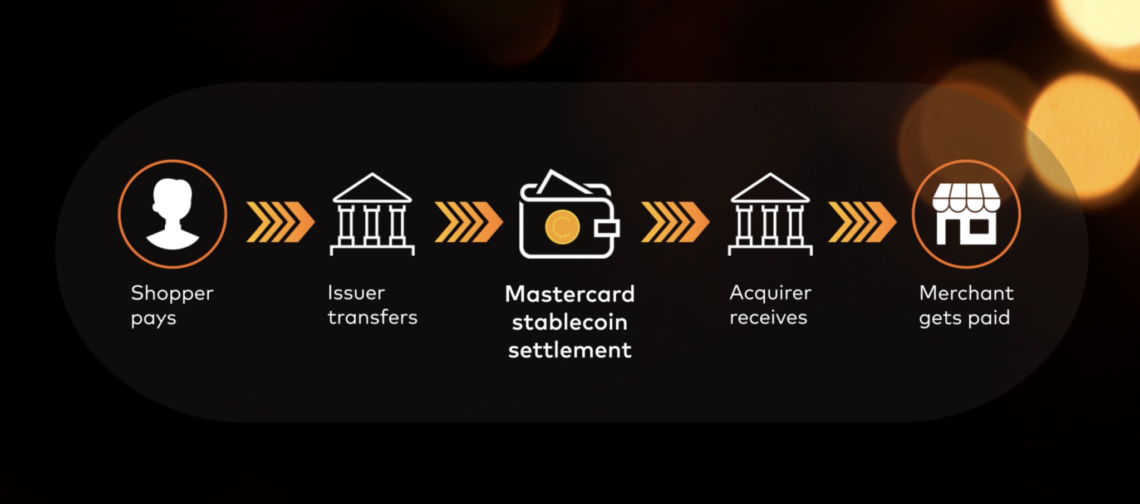
Mastercard today announced plans to make it easier to settle transactions by expanding its intraday, weekend, and holiday settlement capabilities via regulated stablecoins. Settlement with fiat currency is also supported.
The goal is to offer greater flexibility for card issuer banks and merchant acquirer financial institutions, which have to manage settlement timing and liquidity without disrupting existing processes. Mastercard said these upgrades are particularly relevant to settlements where stablecoins bring big benefits, including cross-border payments, corporate treasury management, and liquidity needs outside of traditional banking hours.
Mastercard will support settlement using Circle’s USDC, Ripple’s RLUSD, SoFi’s SoFiUSD, and three Paxos-issued stablecoins: USDG, USDP, and PayPal’s PYUSD. These stablecoin payments will be supported on blockchains including Arbitrum, Base, Canton, Ethereum, Polygon, Solana, Tempo, and XRPL.
ARQ (formerly known as DolarApp), CBW Bank, Cross River, Lead Bank, and Nuvei are expected to be among the first institutions to support the option to use stablecoins for settlement in the United States and Latin America, with further expansion planned through 2026.
Partners will be able to use the same global infrastructure they use today to access both traditional and digital asset-based settlement. This will ensure the availability of programmable and always-on payments while upholding existing protections including security standards, fraud safeguards, and dispute processes.
“The next phase of stablecoin adoption is about real-world utility, especially in settlement, where timing and liquidity matter most,” said Raj Dhamodharan, executive vice president, blockchain & digital assets, at Mastercard. “By introducing intraday and weekend settlement options across our global network, we’re expanding how partners manage liquidity and operate in an always-on digital economy while maintaining the trust, resilience and safeguards they expect.”
Payments firms’ stablecoin push
Mastercard has not been alone in aggressively building out its stablecoin support infrastructure. In April, Visa revealed that its stablecoin settlement pilot program had reached an annualized $7 billion run rate while expanding the number of supported blockchains to nine. Its goal was to standardize settlement across fragmented blockchain networks on a common infrastructure layer.
The remittance industry has also been aggressively moving into stablecoin settlement. On June 2, MoneyGram launched the MGUSD stablecoin on the Stellar blockchain for use in its global payments network.
And in May, Western Union announced the launch of the USDPT stablecoin, bringing blockchain-based settlement to its remittance business, calling it an important step in “the company’s evolution toward regulated, digital‑first financial infrastructure.”
You May Also Like
-
 April 29, 2026
 -
 June 2, 2026
 -
 May 28, 2026


